Blog
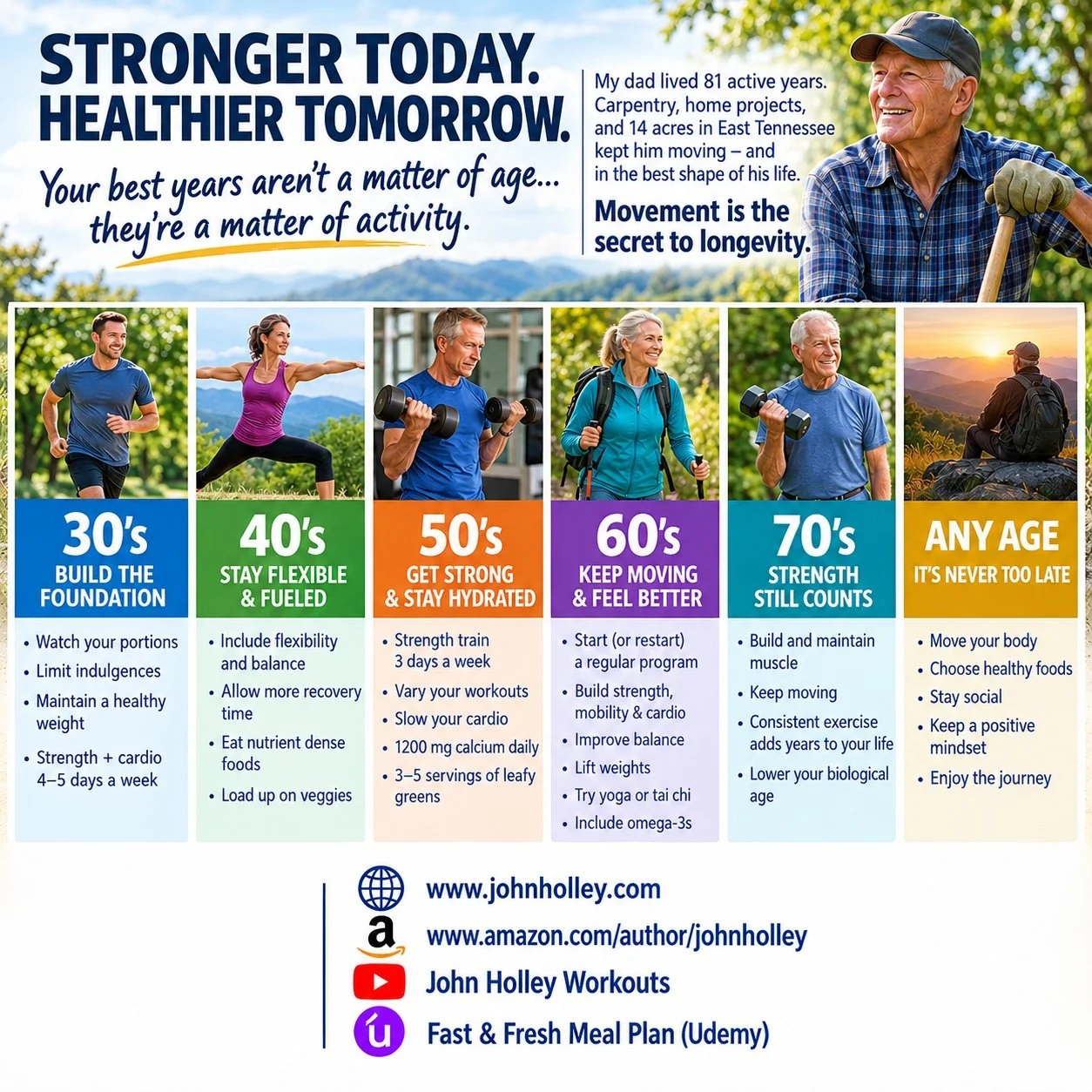
FITNESS THROUGH THE AGES
My dad lived 81 very active years. Carpentry was his profession and he also spent his nights and weekends remodeling the homes we lived in when I was a boy. Later in life, the 14 acres he owned in East Tennessee required year-round maintenance and he took pride in doing it himself. His daily movement was the key to his good health. Despite the fact he ate too much of my mom’s cooking, an active lifestyle protected him from many of the ravages of time. Here’s a decade-by-decade look at how you can be in yard work shape at any age.
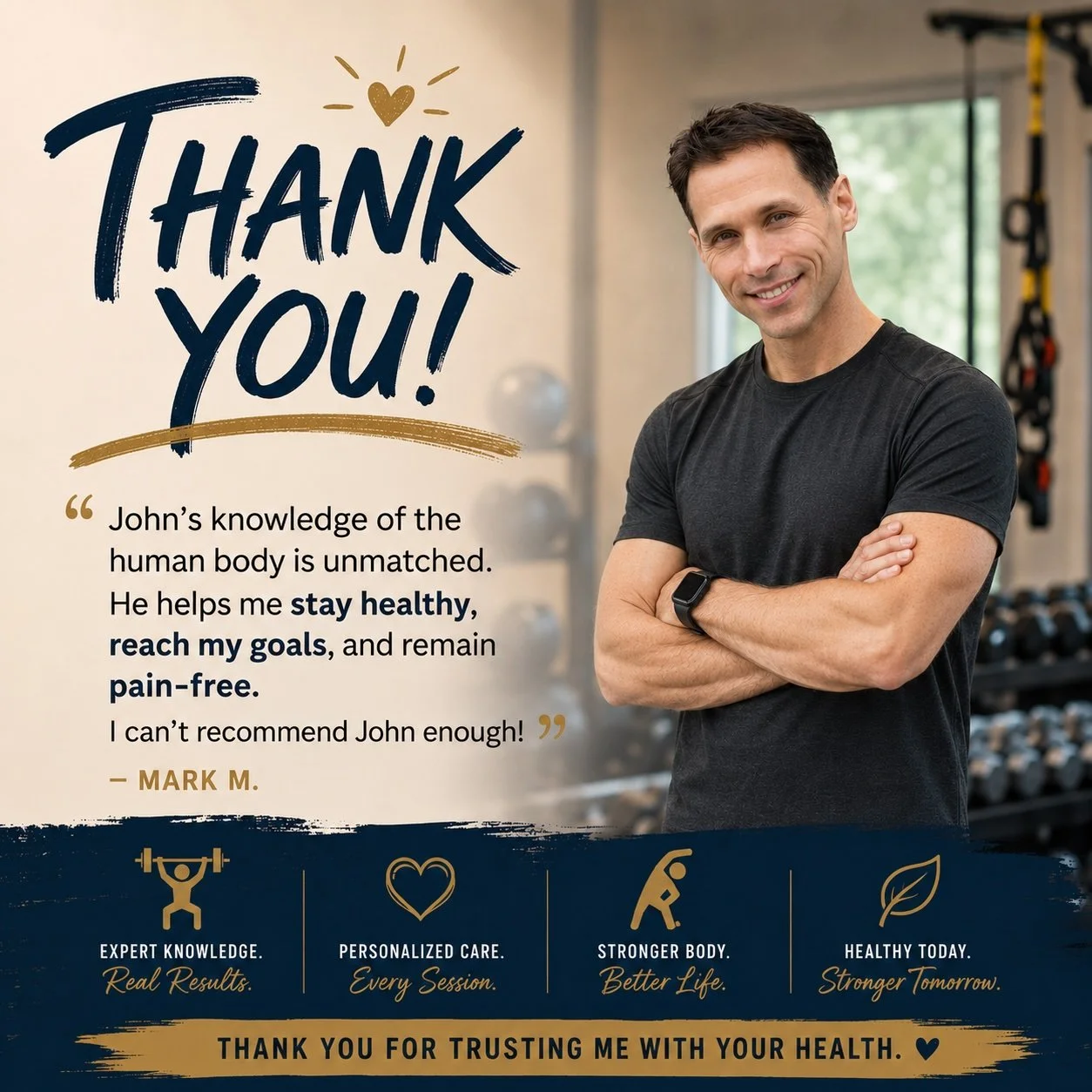
THANK YOU!
John has been my trainer for eight years and is the person I trust most with my health. He individualizes every session to my body and what I'm going through rather than running a canned routine, and his guidance on eating well plus his books have been wonderful resources for my whole family. Beyond all of that, he's simply a great person to be around.
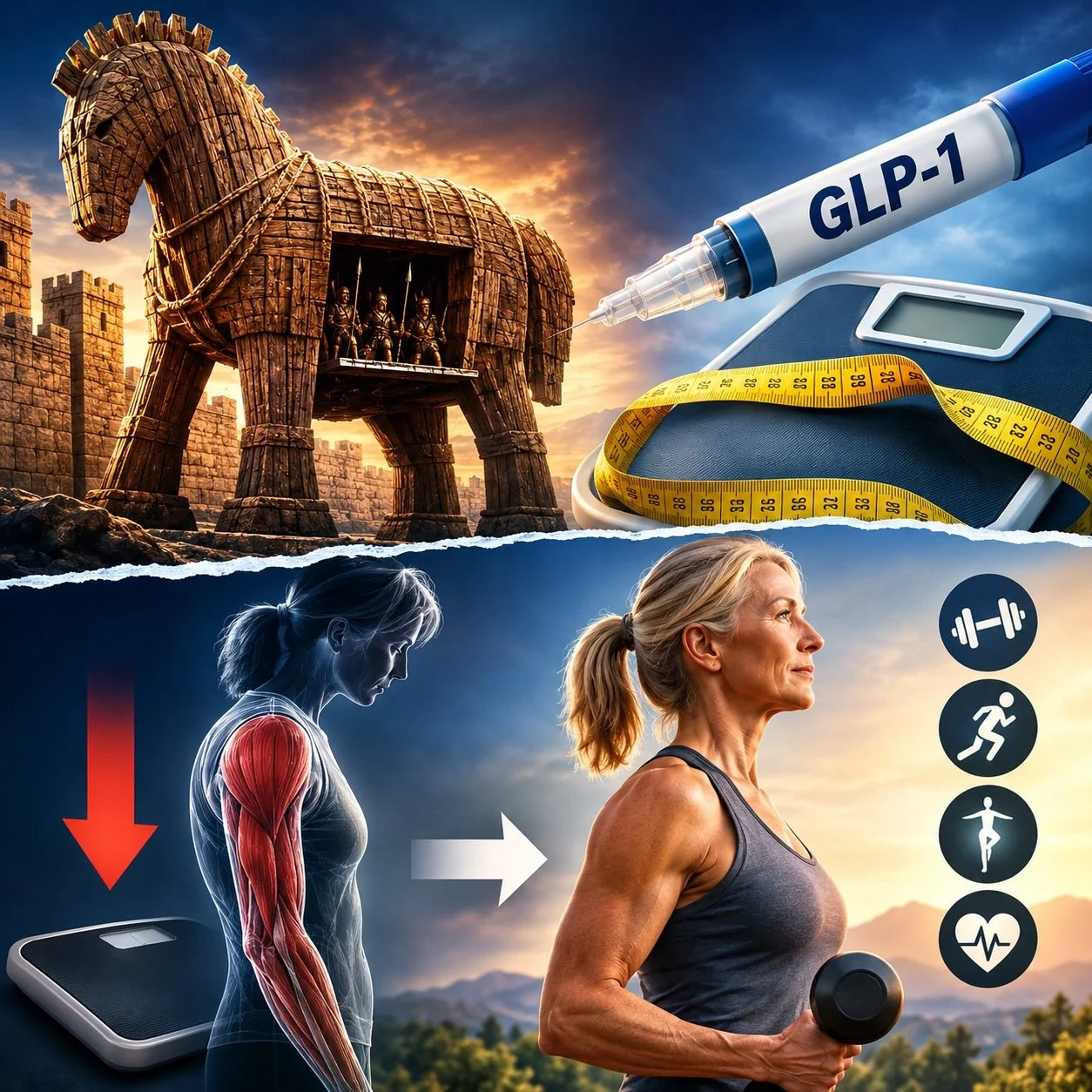
ARE GLP-1 DRUGS A TROJAN HORSE?
Christopher Nolan’s The Odyssey has brought Homer’s ancient story back into the cultural spotlight. At its heart is one of history’s most enduring warnings: sometimes the greatest danger arrives disguised as a gift. The Trojan Horse looked like the spoils of victory but hidden inside was defeat.
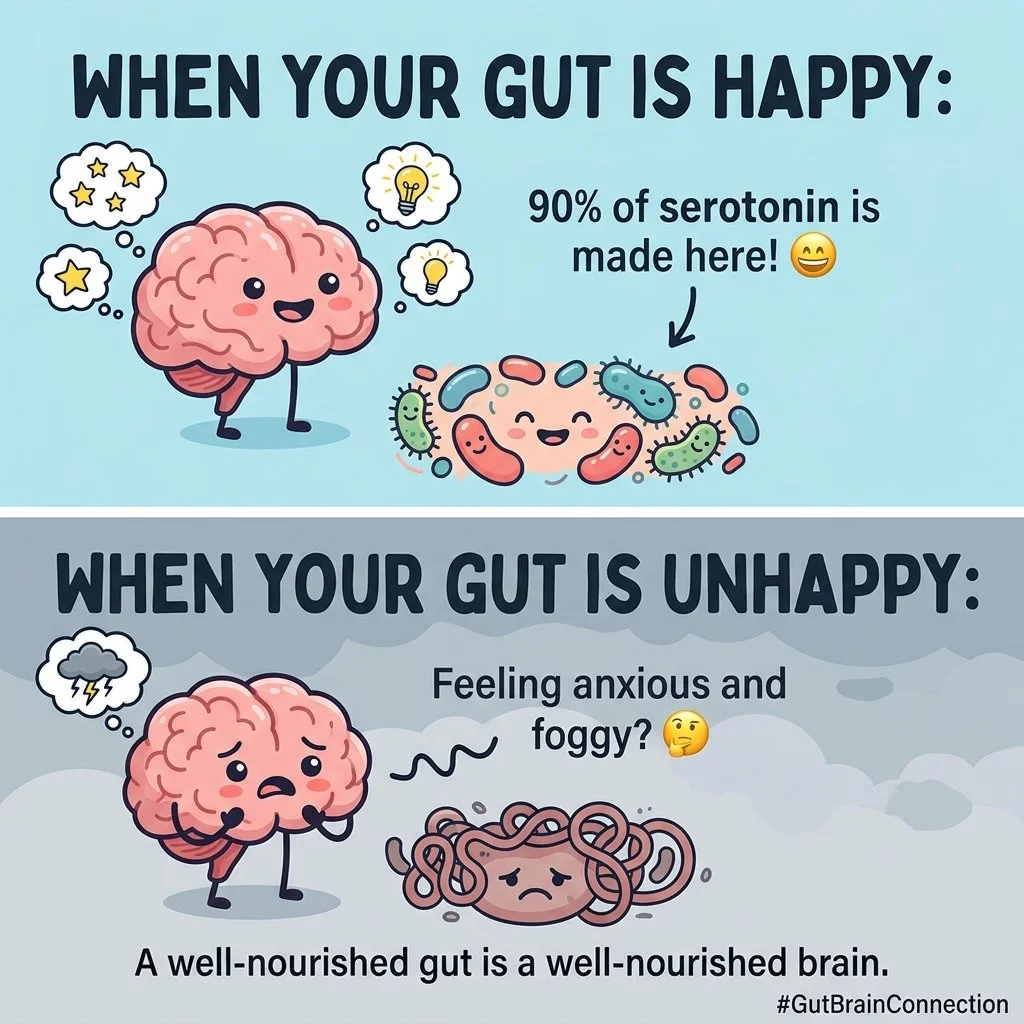
WHY GUT HEALTH MATTERS
Mental health is not solely a matter of the mind. Tend to your gut through diet, lifestyle, and stress management. This evidence-backed, yet underutilized strategy builds psychological resilience. A well-nourished gut is a well-nourished brain.

IS THE PROTEIN IN YOUR POP TARTS A LIE?
Don't let the big-food marketers fool you. True health can't be manufactured in a laboratory and sprayed onto a sugary wafer. Next time you want to fuel your body, skip the fortified junk aisle and reach for real, whole foods instead.

STAY HYDRATED: STRATEGIES THAT WORK
Thirst is a late signal. By the time you feel it, you're dehydrated. A better strategy is to front-load your hydration: drink a full glass of water immediately upon waking, before coffee or food. Overnight, your body loses fluid through respiration and mild sweating, so morning is a natural deficit to address. This morning habit is one of the best hydration strategies.

WHAT? WHY? HOW?
Getting back on track isn't about punishment for time lost or dramatic overhauls announced at full volume. It's a quiet, honest conversation with yourself: What do I actually want? Why does it matter to me? And how will I show up — on the hard days too?

SLEEP AND BRAIN HEALTH
Sleep is one of the most critical factors for brain health, yet it is often the first thing you sacrifice. While you sleep, the brain performs essential maintenance tasks that support memory, emotional regulation, learning, and detoxification. A consistent lack of quality sleep can lead to cognitive decline, increased risk of neurological diseases, and impaired decision-making.

GRATITUDE IS GOOD FOR YOU
Most importantly, gratitude reconnects us to our bodies, to other people, and to the present moment. It fosters stronger relationships, which are among the most powerful predictors of long-term health and longevity. Feeling supported, seen, and appreciative creates a sense of belonging that no supplement or workout routine can replace.

HOW TO CHANGE (REALLY!)
Lasting change is not about willpower in the month of January. It is about cultivating an inner framework that aligns identity, process, emotional resilience, compassion, patience, and choice. When mindset supports behavior, change stops being something you try to force—and becomes something you naturally sustain.

TRUE RECOVERY
Self-compassion is essential during this period. The body and mind may feel slower than usual, and productivity may lag. Instead of demanding immediate “normalcy,” it helps to view recovery as a transition rather than a reset. Rest is not laziness; it is repair. Emotional sensitivity is not weakness; it is information.
GET SMARTER WITH EXERCISE
One of the primary ways exercise supports brain function is by increasing blood flow to the brain. When you engage in aerobic activities like walking, swimming, or cycling, your heart pumps more blood, delivering oxygen and essential nutrients to brain cells. This boost in circulation helps the brain function more efficiently, supporting clearer thinking, faster processing, and sharper memory.

HOW TO FEED YOUR MIND
The food we eat has a direct impact not just on our physical health, but on the health and function of our brains. Just like the body, the brain requires a steady supply of fuel—and the quality of that fuel plays a crucial role in how well it operates. From memory and focus to emotional balance and long-term cognitive health, nutrition is one of the most powerful tools we have to support and enhance brain function.

EXERCISE AND MENTAL HEALTH
Importantly, exercise doesn’t need to be intense or time-consuming to be effective. The key is consistency and finding a form of movement that feels enjoyable and sustainable. Walking, cycling, dancing, gardening—any activity that raises your heart rate and engages your body can have a positive impact on your mind.

EXERCISE IS THE FOUNTAIN OF YOUTH
Aging is an inevitable part of life, but how you age is significantly influenced by the choices you make, especially when it comes to physical activity. While there’s no magic pill to stop time, regular exercise is the closest thing science has found to an anti-aging elixir. Breaking a sweat benefits you down to the cellular level and improves your quality of life.

EXERCISE AND CREATIVITY
At the most basic level, exercise increases blood flow and oxygen to the brain, promoting the growth of new brain cells and improving overall brain function. This biological boost can lead to sharper thinking and better memory, but it also has a profound effect on creative thought. Studies have shown that moderate aerobic exercise—such as walking, jogging, or cycling—can increase divergent thinking and allows you to generate multiple solutions to a problem. This contrasts with convergent thinking, which seeks a single correct answer, divergent thinking is the heart of creativity.

LIFE IS TIGHT
Life is tight. That’s a saying a friend of mine likes to repeat. What does that mean? In slang terms it means: Life Is Great. Even if you don’t think that’s true all the time, when you embrace each moment with gratitude and intention you may change your mind. Life is tight.

MAKING PEACE WITH TECHNOLOGY
The biggest challenge many of us face today is our relationship with technology. Who’s in charge of who? Are you uncomfortable without your phone? Do you obsess about how many downloads your video is getting? Have you felt sad if a recent post didn’t get many likes? Nevermind the oncoming freight train of AI. .It is time to make your peace and find a healthy balance with technology.

FINDING BALANCE
What do you do when your life becomes a little too rich with experience? It is easy to become overwhelmed in this world. Consider the video screens you find on many gas pumps. What the…? Do we need or want constant news, music, and trivia? This stimulation is on top of the phones we all carry and the social media fascination, which steals so much time and emotional energy. Given the state of the world, you need to consciously connect with mindfulness to focus and feel a sense of balance.
CREATING A MINDFUL APPROACH TO YOUR LIFE
The impact of embracing mindfulness as a lifelong pursuit extends far beyond individual moments. It affects your relationships, shapes your experiences, and your overall sense of fulfillment. When you practice self-compassion, letting go, and open heartedness you are creating a life filled with depth and meaning.